
SEARCH WHAT YOU WANT
Why the Automotive Industry Demands High-Performance Masterbatch
Time:2026-09-14
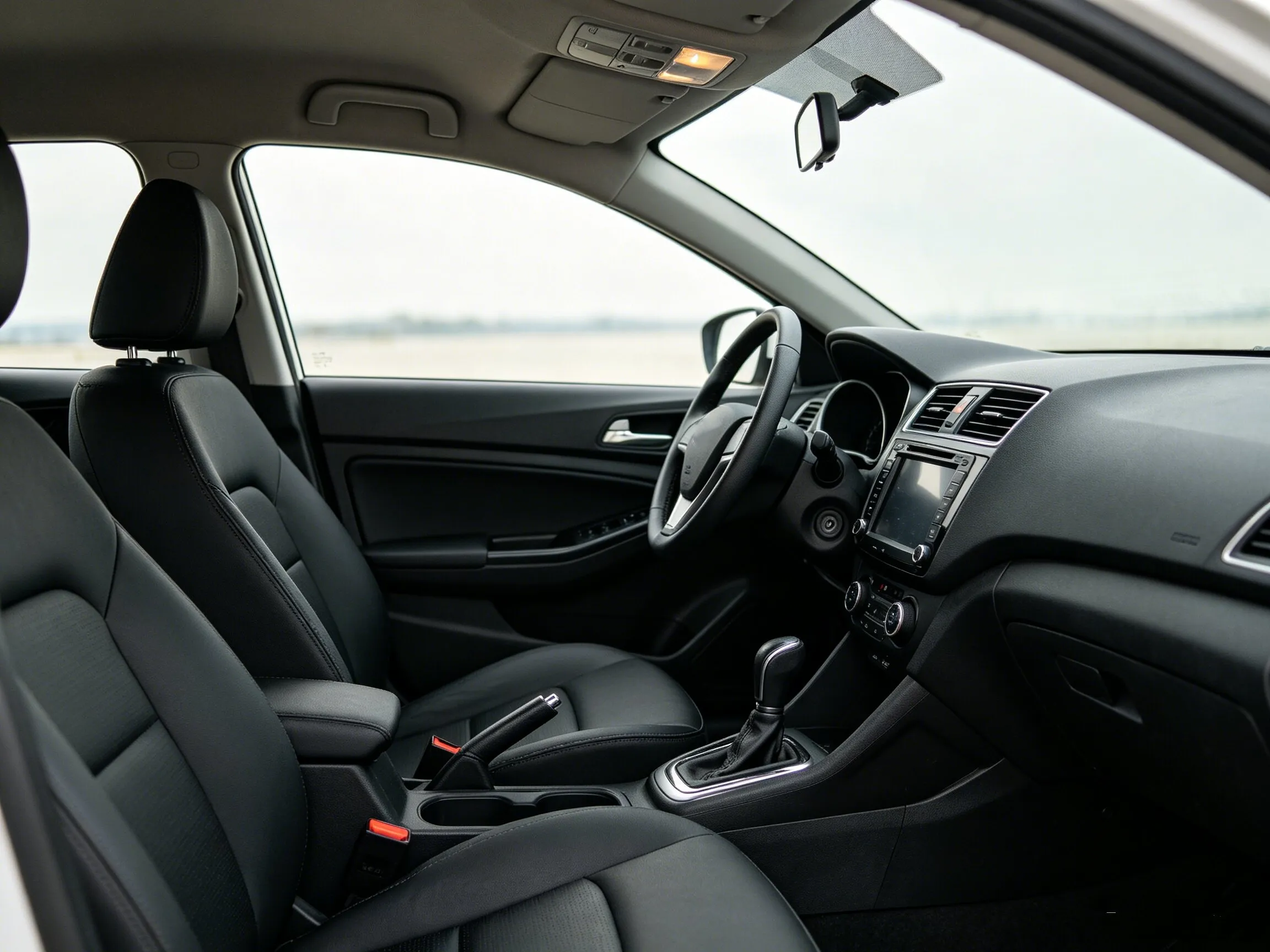
A car interior is assembled from dozens of injection-molded parts - produced in different tools, different plants, oftenly in different countries - that must match perfectly under showroom lighting and stay matched through sunlight and heat.
That single sentence explains why automotive is one of the most demanding masterbatch applications, and why not every supplier can serve it.
It also explains the reason why automotive grades cost more than commodity colors, and why that premium is rational, for example, a bumper that fades two shades after three years, or an interior trim panel that mismatches the door card beside it, it is a warranty claim, a line rejection and a supplier-rating penalty.
The masterbatch premium buys the process control, testing and documentation discipline that keep those events from happening across millions of injection parts.
Five Points That Define Automotive Grade :
1. Color consistency
Interior and exterior parts are molded by multiple suppliers, and the OEM judges them as a set. Practical tolerances are tight: batch-to-batch ΔE* below 0.3, measured by spectrophotometer, with control of metamerism so parts match under both daylight and cabin lighting. This demands in-line color measurement at the masterbatch plant - not just at the molder.
2. Heat and UV endurance
A dashboard surface can reach sustained temperatures above 100 degrees in summer sun, and UV passes through glazing while filtering out much of the visible spectrum - the worst case for pigment fade. Automotive pigments and carbon black need lightfastness ratings of 7-8 and heat stability matched to long oven-aging protocols. Colors are qualified per OEM material specification, not per generic TDS (technical data sheet).
3. Mechanical integrity
Masterbatch must color a part without weakening it. Poorly dispersed pigment acts as a stress concentrator and measurably reduces impact strength in PP/TPO bumpers and trims.
Under-hood components in glass-filled polyamide run continuously above 120 degree and need carriers and pigments that survive it.
4. Surface and scratch behavior
Interior trim grain, low-gloss finishes and scratch-resistance requirements increasingly involve the masterbatch formulation itself: pigment particle size, carrier and special additives all influence how a surface looks after ten years of elbows and seatbelts.
5. Documentation and systems
Automotive programs run on documentation: OEM-specific material specifications, PPAP-style approvals, and IMDS (International Material Data System) submissions for every material entering the vehicle. A masterbatch supplier to the automotive chain must provide IMDS-ready compositional data and keep it stable over the program life.
What Suppliers Should Look For
Spectrophotometric batch control, with color certificates issued per lot.
Dispersion verification on every batch for impact-critical parts.
Experience with OEM material specifications and active IMDS support.
Formulation change discipline - automotive grades should never be quietly reformulated.
The gap between a commodity color and an automotive-grade masterbatch is invisible in a sample chip and fully visible after two summers of sunlight. Choosing suppliers against the five requirements above is how suppliers keep that gap closed.
This article was prepared by Jolink (www.jolink-masterbatches.com), a manufacturer of high-concentration black and color masterbatches for pipe, film, injection molding and cable applications. https://www.jolink-masterbatches.com/product/category/pp-pe-modified-black-masterbatch
A car interior is assembled from dozens of injection-molded parts - produced in different tools, different plants, oftenly different countries - that must match perfectly under showroom lighting and stay matched through a sunlight and heat.
That single sentence explains why automotive is one of the most demanding masterbatch applications, and why not every supplier can serve it.
It also explains the reason why automotive grades cost more than commodity colors, and why that premium is rational, for example, a bumper that fades two shades after three years, or an interior trim panel that mismatches the door card beside it, it is a warranty claim, a line rejection and a supplier-rating penalty.
The masterbatch premium buys the process control, testing and documentation discipline that keep those events from happening across millions of injection parts.
Five Points That Define Automotive Grade :
1. Color consistency
Interior and exterior parts are molded by multiple suppliers, and the OEM judges them as a set. Practical tolerances are tight: batch-to-batch ΔE* below 0.3, measured by spectrophotometer, with control of metamerism so parts match under both daylight and cabin lighting. This demands in-line color measurement at the masterbatch plant - not just at the molder.
2. Heat and UV endurance
A dashboard surface can reach sustained temperatures above 100 degree in summer sun, and UV passes through glazing while filtering out much of the visible spectrum - the worst case for pigment fade. Automotive pigments and carbon black need lightfastness ratings of 7-8 and heat stability matched to long oven-aging protocols. Colors are qualified per OEM material specification, not per generic TDS (technicial data sheet).
3. Mechanical integrity
Masterbatch must color a part without weakening it. Poorly dispersed pigment acts as a stress concentrator and measurably reduces impact strength in PP/TPO bumpers and trims.
Under-hood components in glass-filled polyamide run continuously above 120 degree and need carriers and pigments that survive it.
4. Surface and scratch behavior
Interior trim grain, low-gloss finishes and scratch-resistance requirements increasingly involve the masterbatch formulation itself: pigment particle size, carrier and special additives all influence how a surface looks after ten years of elbows and seatbelts.
5. Documentation and systems
Automotive programs run on documentation: OEM-specific material specifications, PPAP-style approvals, and IMDS (International Material Data System) submissions for every material entering the vehicle. A masterbatch supplier to the automotive chain must provide IMDS-ready compositional data and keep it stable over the program life.
What Suppliers Should Look For
Spectrophotometric batch control, with color certificates issued per lot.
Dispersion verification on every batch for impact-critical parts.
Experience with OEM material specifications and active IMDS support.
Formulation change discipline - automotive grades should never be quietly reformulated.
The gap between a commodity color and an automotive-grade masterbatch is invisible in a sample chip and fully visible after two summers of sunlight. Choosing suppliers against the five requirements above is how suppliers keep that gap closed.
This article was prepared by Jolink (www.jolink-masterbatches.com), a manufacturer of high-concentration black and color masterbatches for pipe, film, injection molding and cable applications. https://www.jolink-masterbatches.com/product/category/pp-pe-modified-black-masterbatch
Previous: How does masterbatch produced ?

Contact Us
Tel: +86 757 8118 6668/+86 139 2320 6383
Sales Hotline: +86 139 2320 6383
Address: No. 55, Yong'an Avenue, Guanyao, Shishan Town, Nanhai District, Foshan City, Guangdong Province, China.
Inquire
Copyright © 2026 Guangdong Jolink Technology Co., Ltd.